Praça do Comércio
Overview
Praça do Comércio is one of Lisbon’s most important and visually striking landmarks. Opening directly onto the Tagus River, this vast square has long served as the symbolic front door to the city—welcoming traders, explorers, and visitors for centuries. With its grand architecture, riverside setting, and deep historical roots, Praça do Comércio is a must-visit stop for anyone exploring Lisbon for the first time.
More than just a public square, Praça do Comércio represents Portugal’s maritime legacy, its resilience after disaster, and its enduring connection to the sea. Whether you’re passing through on a walking tour or lingering to watch the sunset over the river, this space captures the spirit of Lisbon in a way few places can.
Where Is Praça do Comércio?
Praça do Comércio is located in Lisbon’s Baixa district, the historic downtown area rebuilt after the devastating 1755 earthquake. The square sits at the southern end of Rua Augusta, one of Lisbon’s main pedestrian streets, and opens directly onto the Tagus River.
Thanks to its central location, Praça do Comércio is easily accessible and often acts as a starting or ending point for exploring nearby neighborhoods such as Alfama, Chiado, and Bairro Alto. Its openness and river views make it feel both grand and relaxed, offering a natural pause amid busy sightseeing days.
A Brief History of Praça do Comércio
Before the square existed, this site was home to the Ribeira Palace, the main residence of Portuguese kings for nearly two centuries. The palace complex also housed administrative offices tied to Portugal’s global trade empire, reinforcing the area’s importance as a commercial and political center.
In 1755, a massive earthquake, followed by fires and a tsunami, destroyed much of Lisbon—including the Ribeira Palace. In the aftermath, the Marquis of Pombal led the city’s ambitious reconstruction. Instead of rebuilding the palace, planners designed a monumental open square that reflected Lisbon’s rebirth and its focus on commerce rather than monarchy.
The result was Praça do Comércio as it exists today: an elegant, symmetrical space that faces outward toward the river, symbolizing openness, trade, and renewal.
Architectural Highlights
Praça do Comércio is defined by its U-shaped layout, framed by long yellow buildings with arcaded walkways. These Pombaline-style buildings are both elegant and functional, designed to withstand earthquakes while maintaining visual harmony.
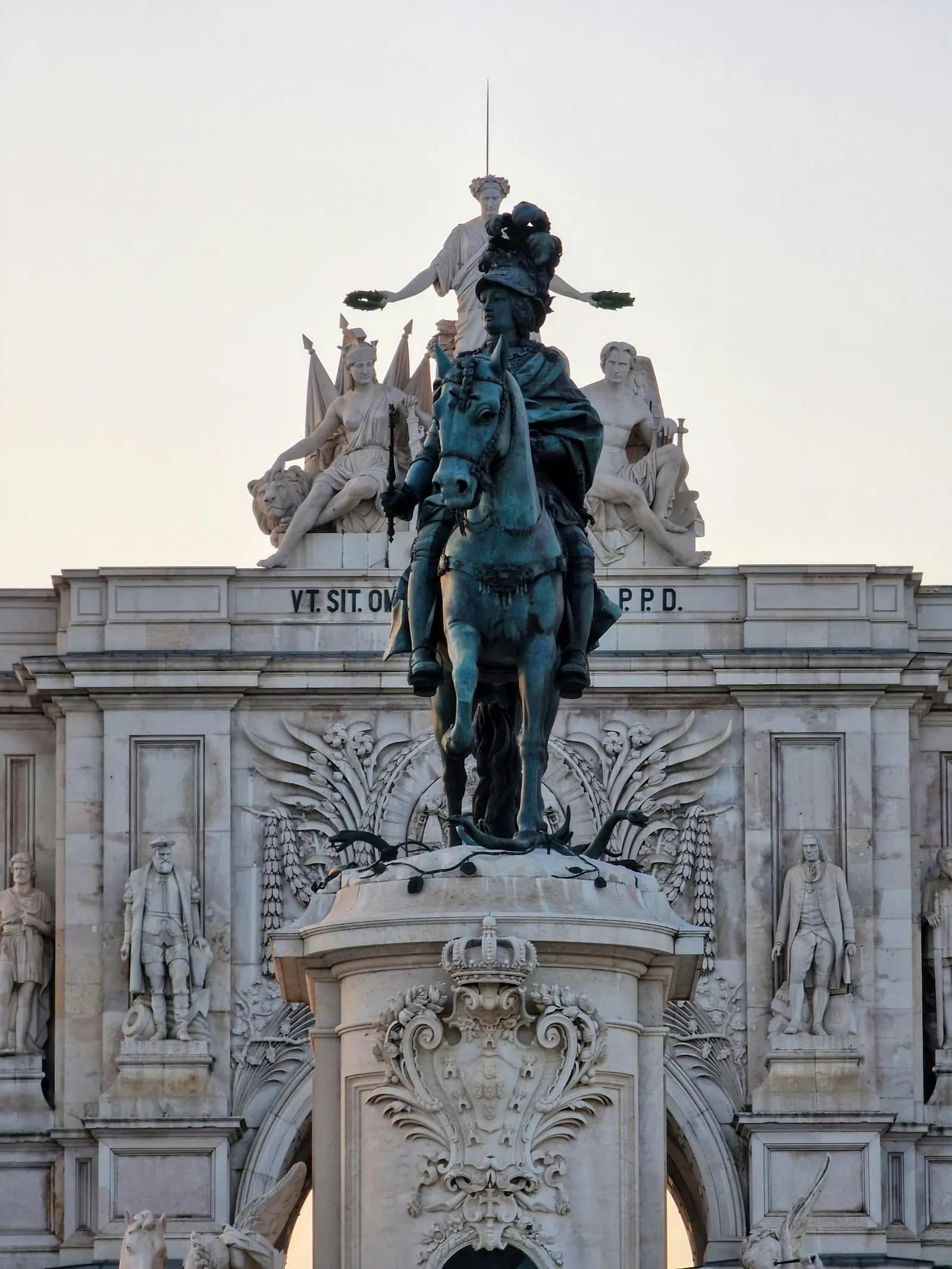
At the center of the square stands the equestrian statue of King José I, Lisbon’s first such monument. The statue depicts the king triumphantly riding his horse over snakes, symbolizing victory and authority during a period of national rebuilding.
The open side of the square faces the Tagus River, creating an uninterrupted visual connection between Lisbon and the water that once carried its ships across the globe.
Arco da Rua Augusta
One of Praça do Comércio’s most recognizable features is the Arco da Rua Augusta, the grand triumphal arch linking the square to Rua Augusta. Completed in the late 19th century, the arch commemorates Lisbon’s recovery after the earthquake and celebrates Portuguese history.
Visitors can enter the arch and take an elevator and staircase to the viewing platform at the top. From here, you’ll enjoy panoramic views over Praça do Comércio, Baixa’s grid-like streets, Alfama’s hills, and the Tagus River. It’s one of the best viewpoints in central Lisbon and well worth the short climb.
Things to Do at Praça do Comércio
Praça do Comércio is a place to slow down and absorb Lisbon’s atmosphere. Many visitors come simply to wander, sit by the river, or take photos of the expansive square and surrounding architecture.
The Cais das Colunas, the marble steps leading directly into the river, are especially popular. Historically used as a ceremonial landing point, they’re now a favorite spot for watching ferries glide past and enjoying river breezes.
Street performers, musicians, and pop-up events often animate the square, making each visit slightly different depending on the time of day and season.
Museums and Cultural Attractions Nearby
One of the main cultural highlights within the square itself is the Lisboa Story Centre, an interactive museum that tells the story of Lisbon from its earliest days to the present. It’s a great stop for visitors who want historical context before exploring the rest of the city.
Beyond the square, Baixa’s museums, churches, and historic streets are all within easy walking distance, making Praça do Comércio a natural anchor point for sightseeing routes.
Restaurants and Cafés Around the Square
Under the arcades surrounding Praça do Comércio, you’ll find a mix of traditional restaurants and casual cafés. Many offer outdoor seating, allowing you to enjoy a meal or coffee while taking in views of the square and river.
While some establishments cater heavily to tourists, it’s still a pleasant area for a relaxed drink or light meal—especially if you value atmosphere over speed. Nearby streets in Baixa and Chiado offer more dining variety if you’re looking for something quieter or more local.
Best Time to Visit Praça do Comércio
Praça do Comércio is accessible at all hours, but different times of day offer different experiences. Morning visits are quieter and ideal for photography, while afternoons bring more activity and street life.
Sunset is particularly magical, as the light reflects off the river and bathes the yellow façades in warm tones. Evenings are also worth experiencing, as the square becomes softly lit and more tranquil once day crowds disperse.
How to Get There
The easiest way to reach Praça do Comércio is by metro. Terreiro do Paço station (Blue Line) opens directly onto the square. It’s also easily reachable on foot from Baixa, Chiado, and Alfama.
Several trams, buses, and ferries stop nearby, making it a convenient meeting point or transit hub while exploring Lisbon.
Tips for Visiting Praça do Comércio
You don’t need a set amount of time to enjoy Praça do Comércio—some visitors pass through in minutes, while others linger for an hour or more. It pairs well with a stroll down Rua Augusta or a walk along the riverfront toward Cais do Sodré.
Wear comfortable shoes, especially if you plan to explore surrounding neighborhoods afterward. For photos, early morning and golden hour provide the best lighting with fewer people in the frame.
Praça do Comércio at Night
At night, Praça do Comércio takes on a quieter, more atmospheric feel. The buildings and arch are softly illuminated, and the riverfront becomes a calm place for evening walks. It’s a beautiful contrast to the lively streets just a few blocks away and a reminder of Lisbon’s slower, more reflective side.
Why Praça do Comércio Is Worth Visiting
Praça do Comércio isn’t just a landmark—it’s a living symbol of Lisbon’s past and present. Its scale, location, and history make it one of the city’s most meaningful public spaces. Standing here, with the river in front of you and the city stretching behind, it’s easy to understand Lisbon’s enduring connection to the sea.
Conclusion
No visit to Lisbon feels complete without time spent at Praça do Comércio. Whether you’re interested in history, architecture, photography, or simply soaking in the city’s atmosphere, this iconic square offers a memorable introduction to Portugal’s capital—and a fitting place to pause and reflect before continuing your journey.
Enjoy your new favourite stay
Discover how you can save on your next stay with Price Drop Protection